Adaeze Global · Kelly Richard Beauty · A Documentary Film Proposal
BECOMING
ADAEZE GLOBAL
On Visibility, Girlhood, and the Quiet Cost
of Learning to Exist in Full.
Adaeze Global · Kelly Richard Beauty · A Documentary Film Proposal
On Visibility, Girlhood, and the Quiet Cost
of Learning to Exist in Full.
Before she built anything, the camera had already found her. Becoming Adaeze Global is the story of a woman assembling herself — in public, across borders, across time — into something the world can see and she can finally, honestly, call her own.
This is not a film about success. It is a film about the architecture of a self — the child who was watched before she understood what watching meant, the girl who moved between countries and versions of herself, the woman who built an empire while simultaneously learning how to be whole inside it. And the mother who discovered that love has a way of completing, quietly, what ambition cannot.
Before she had language for what visibility meant — before she could choose or refuse it — she was already inside it. A baby in a frame. A child reading lines written by someone else. The early experience of being perceived, of performing for the camera before she could fully perform for herself, becomes in this documentary not a footnote but an emotional origin. The camera found her first. She spent the decades that followed learning what to do with that fact.
The documentary does not begin with the woman in full flight. It begins earlier — with the interior life of a girl who felt things deeply, who was often misread, who learned to read rooms because rooms did not always make space for her. This section of the film is not narrated. It lives in still frames, in held shots, in the kind of silence that arrives when you are sitting with someone who has never been asked, genuinely, to describe her own childhood. We are asking now.
There is a specific texture to the emotional life of a girl who grew up being perceived before she had constructed her own perception of herself. The loneliness of it. The quiet vigilance it develops. The way she learned to observe — people, rooms, the distance between what was said and what was meant. These are not psychological diagnoses. They are the materials she later built everything from.
She grew up in a world that had strong opinions about what a woman should be. She had different ones. The negotiation between those two things — between the shape she was handed and the shape she chose — is where the film finds its deepest humanity. Not crisis. Not rebellion. Simply: the long, quiet work of becoming yourself in a world that keeps offering you smaller alternatives.
Motherhood, when it comes, arrives not as the beginning of her story but as its continuation. It does not simplify who she is. It adds another dimension. She becomes, at once, the woman she was building toward and the mother her child needed her to be — and she carries both without hierarchy, with the kind of grace that is not effortless but that has, through repetition and love, learned to look like it.
Each city is not a destination. It is a transformation. Identity does not travel intact — it arrives differently in every place that holds it.
The first geography. The one she carries in her skin and syntax, in the way she occupies a room, in the warmth that surfaces without warning. Home is not always where you are — but it is always where you learned to be.
Precise, ordered, impersonal. A city that does not need you to have a history. She learned, here, the particular freedom of being unknown — and the particular loneliness of it. Both lessons stayed.
Vertical and golden. A city of transaction and arrival, where the grammar of performance is spoken fluently and appearance is currency. She knows this language completely — and chooses carefully when to use it.
Quiet. Deliberate. A geography of interior reckoning — of decisions made in stillness, away from the noise of being seen. The place where some version of herself was reconsidered, and some version kept.
Proximate and distinct. A border geography — the in-between that teaches you where you actually begin. Some migrations are not across oceans. They are across something quieter, and more permanent.
The film lives in the space between these two portraits. Neither is complete without the other.
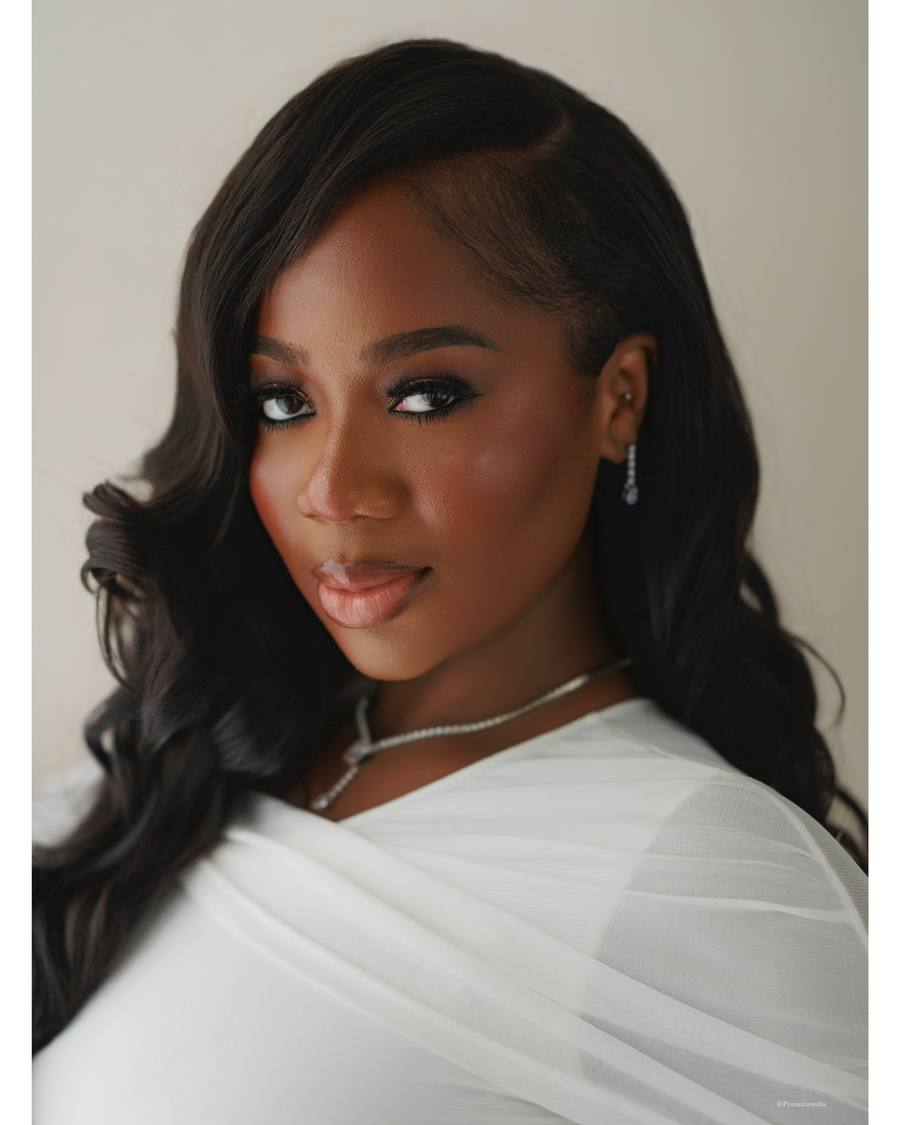
She arrives before she enters. The room adjusts. There is a deliberateness to how she occupies space — not performance but precision, the result of years spent reading environments before she stepped inside them. This is the woman the camera finds at events, on set, in the studio. Composed. Luminous. Entirely present. What the world sees when it looks at Adaeze Global.
The camera found her early. She has had a long time to learn what to do with its attention — and what to keep for herself.
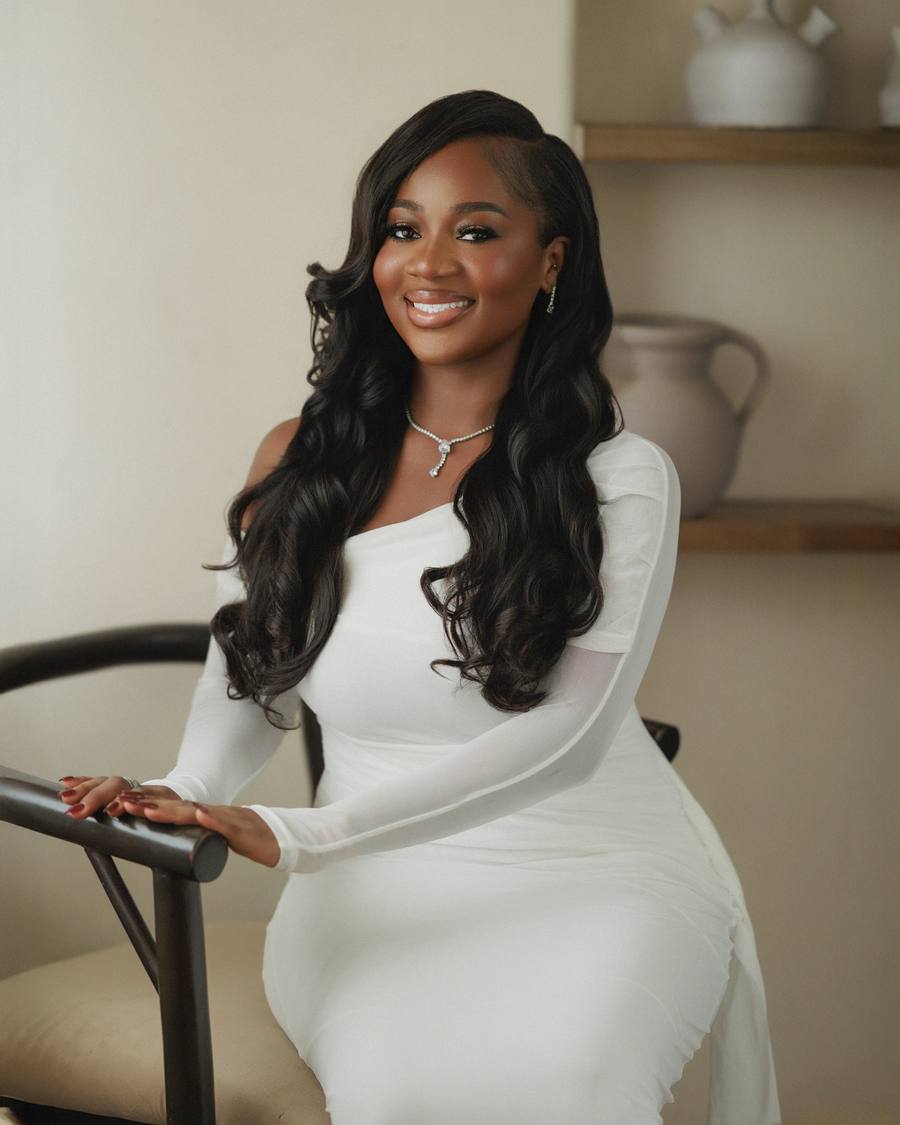
She is quieter than you expect. Softer. She speaks with care — not calculation, but the considered language of someone who has learned the cost of careless words. The woman who lives here notices everything. Feels everything. Has spent considerable time learning to distinguish between the two. She does not hide her tenderness. She considers it, carefully and correctly, a form of intelligence.
The film does not resolve these two selves. It holds them both — as the subject does — with patience, and something approaching grace.
The beauty studio is not the subject of this film. It is where the film breathes — where identity is constructed in real time, where the negotiation between the version of yourself you present to the world and the version that stays private happens daily, in warm light, with a brush in someone's hand.
Kelly Richard Beauty has worked with significant figures in African cultural life — including the globally celebrated Tems, one of the most important voices in contemporary African music. This is noted not as a credential but as context: the studio exists at the intersection of beauty, culture, and the kind of African creative excellence that is reshaping global aesthetics in real time.
The documentary lens finds the studio as a threshold. A place where women — high-profile or private, known or unknown — sit still for a moment and allow themselves to be transformed. What they leave with is more than a face. It is a decision about how they will be seen. And sometimes, quietly, a decision about how they will see themselves.
These are not themes assigned by a director. They came from Adaeze, offered without defence. They are the spine of the film.
"She has no desire to hide her vulnerability. She considers it one of her greatest strengths."
In a world that rewards the performance of imperviousness — especially in a woman who has built something, especially in public, especially in Africa — she makes a different choice. She opens herself. Not as spectacle. Not as content. But as philosophy: a conviction, held quietly and with great care, that to be seen in full — including the uncertain parts, the tender parts, the unresolved parts — is not weakness. It is the only honest form of strength she trusts.
"Throughout childhood and adulthood she has experienced being misunderstood by people who struggle to reconcile the different dimensions of her personality."
She is too many things for a single reading. Too warm for one room, too composed for another. Too much and not enough, always in the wrong proportion for whoever is looking. The experience of being consistently misread — of watching people flatten a complex interior life into something more convenient — is one of the oldest and most specific injuries of visibility. The film takes that injury seriously. Not as grievance. As evidence: of the distance between how the world receives women and how women actually live.
"The emotional cost of success has been the loss of peace of mind while navigating life as a young single mother."
This is the line that changes everything. The one that arrives in the middle of an ordinary conversation and reorders all the frames around it. Behind the brand, the studio, the bookings, the travel — is a woman doing the mathematics of single motherhood: the love and the exhaustion and the constant invisible calculation of what it costs to give your child everything while also becoming everything you were meant to be. The documentary does not dramatise this. It simply refuses to look away from it.
"The legacy she wants to leave behind is a world where women are seen, heard, respected, protected, and given space to fully exist."
This is not a tagline. It is a lived position — the endpoint of everything this documentary traces from the beginning. A girl who was watched before she understood herself. A woman who moved between countries and versions of identity. A mother raising a child inside all of it. What she wants to leave is the thing she needed but did not always have: a world with more room in it. The act of making this documentary is, in part, an act of building that room.
The camera found her before she found herself. The documentary begins here: in the particular emotional texture of a child who was perceived before she could choose her own perception. Not trauma. Not damage. But something that shaped the way she learned to move through the world — always slightly aware of being watched, always making small, careful decisions about what to let the watching see.
Being seen is not the same as being known. She has been seen — extensively, publicly, constantly. The film asks what it would mean to be known instead. To have the distance between the image and the woman finally, honestly, tenderly closed. This is, among other things, what a documentary can do that a photograph cannot.
She does not perform invulnerability. She chooses, instead, a different kind of strength — one that holds the uncertain parts openly, that does not apologise for the tender parts, that understands that to be fully known requires the willingness to be fully seen. The film finds this choice beautiful. It also finds it, in the context of the world she navigates, genuinely radical.
A woman raising a child alone, building a public life simultaneously, carrying the private weight of both without remainder. The documentary does not resolve this tension into inspiration. It holds it as it is: consuming, quiet, psychologically demanding, and deeply human. The most underrepresented dimension of the ambitious woman's life — finally given the full cinematic attention it deserves.
Nigeria. Singapore. Dubai. Qatar. Benin Republic. Each geography she has inhabited has changed her. Identity does not travel intact — it arrives differently in every place that holds it. The documentary traces not just the physical movement but the interior one: the version of herself she built in each place, the fragments she carried forward, the ones she chose to leave behind.
She wants to leave a world with more space in it. Not a monument. Not a brand. A world where women are protected. Where they are not required to choose between their complexity and their acceptance. The film's final act lives here — in the question of what it means to build something for people who are not yet alive to inhabit it.
The camera earns every close-up. Skin tones treated as landscape — luminous, dimensional, held with reverence. A film that knows what to withhold.
35mm grain as the governing aesthetic. Never intrusive. The camera learns her rhythms and moves with them: slow, deliberate, watchful. Handheld only in moments of genuine emotion, and even then — barely. We earn what we see.
The golden hour in Lagos. Tungsten warmth in private rooms. Faces emerging from shadow. The way afternoon sun finds the side of a face and makes it briefly, painfully beautiful. We resist the clinical flatness of overlit documentary.
Aso-oke against marble. Aged leather against new glass. The visual vocabulary is tactile — as much about surface and touch as it is about image. Luxury and rootedness held in the same frame, always without resolution.
Portraits shot in warm neutral environments. White garments as a symbol of quiet exposure — not purity, but stillness. Softness without fragility. The face allowed to simply be itself, without direction, for as long as it takes.
The film is not afraid of duration. A held shot of a woman thinking is not empty — it is the whole film, compressed. We do not cut to rescue the audience from feeling. We allow scenes to arrive at their own weight.
Warm blacks. Rich desaturated midtones. Skin treated with absolute reverence — luminous, dimensional, unreduced. A palette moving between candlelight amber and predawn silver. No filters. No Instagram. Cinema.
The international documentary canon has rarely given its full attention to the interiority of a young African woman building something — not as case study, not as inspiration, but as a fully realised human being. This film does not argue for her visibility. It simply provides it, at the level it deserves.
She appeared on screen as a baby. As a child in film. The documentary's emotional architecture begins with this fact and never fully releases it — because the question it raises (what does it cost, to be seen before you understand what seeing means?) is the question of the whole film.
Single motherhood in the context of ambitious professional life is almost never told without sentimentality or spectacle. This film refuses both. It holds the complexity of a woman raising a child alone while building a world — and finds in that complexity something true, something urgent, something the cinema owes its audience.
African music, fashion, film, and creative entrepreneurship are not emerging. They have arrived. A documentary that captures one of its most compelling human stories — made with this level of cinematic intentionality, now — enters a global conversation at exactly the right moment.
The conversation about mental wellness, peace of mind, and the psychological cost of ambition — particularly for high-achieving women, particularly in African contexts where vulnerability is culturally complex — is one of the most urgent conversations of our time. This film inhabits it honestly, without therapy-speak or solutions.
She wants to leave a world where women are protected. This documentary is, in part, a first act of that protection — a work that insists her full interior life belongs in the permanent cultural record. Not her brand. Her. The act of making this film is itself the legacy beginning to happen.
International positioning first. AFRIFF is not the beginning of the film's journey — it is its triumphant, emotionally necessary destination.
This film was made on African soil, about an African woman, with the full formal ambition that African stories have always deserved. Its African premiere belongs at AFRIFF — not as an afterthought, but as a homecoming. The international journey is the credential. The AFRIFF premiere is the truth. When this film screens in Lagos, it is not presenting itself to Africa. It is returning to Africa, with interest, what Africa made possible.
This is not a fundraising appeal. It is an invitation to become part of a culturally significant work — to participate in the creation of a film that will outlast the moment it is made in.
Primary filming across Nigeria — Lagos, Abuja — covering observational documentary, formal interviews, and cinematic vérité sequences across public and private environments, including the Kelly Richard Beauty studio.
Travel and logistics supporting the international dimension: Singapore, Dubai, Qatar, Benin Republic. The film's geographical scope requires a production capable of capturing her story wherever it lives.
Director of Photography, sound recordist, production crew. Camera systems, lenses, lighting, and sound design equipment meeting international documentary broadcast standards.
Full post-production: picture editing, cinematic colour grading, sound design and mix, original score, archival licensing. Delivered to international broadcaster technical specifications.
Digital Cinema Package creation, subtitling, festival submission fees, press materials, and festival screener development for the international circuit positioning strategy.
Pre-production development, rights clearances, music licensing, and delivery materials for streaming platform acquisition. Fully prepared for international distribution from day one.
To invest in this film is not simply to fund a documentary. It is to help preserve a story that belongs to the cultural record of modern Africa — and to every woman, anywhere in the world, who has carried more than the world gave her credit for.
We are seeking alignment — not sponsorship. Partners who understand that the most enduring investment is in a story that will outlast the news cycle.
Organizations committed to women's visibility, leadership, and emotional wellbeing. This film embodies those values — not as advocacy, but as art that advocates by existing.
Brands whose identity aligns with modern African femininity, creative sovereignty, and the prestige aesthetic of the film. Alignment with the work, not advertising within it.
Institutions for whom this documentary represents a contribution to African cultural history — and a centrepiece for programming, installation, and archival acquisition.
Vogue Africa, Arise, BBC Africa. Partners for whom this story is simultaneously a documentary project and a platform for the larger conversation it embodies.
Organizations working at the intersection of gender, representation, and social change, for whom this film provides a powerful cultural artifact for their educational mission.
Sundance Institute, Tribeca Film Institute, DocSociety, African documentary development funds, and international co-production partners.
“Supporting this film is not simply
funding a documentary.
It is participating in something true.”
There are films that document, and films that witness. Becoming Adaeze Global is the second kind. It does not present its subject as a symbol or a success story. It presents her as a full human being — assembled across borders, across time, across versions of herself — whose experience is, in its specificity and its honesty, a mirror for the experience of women everywhere who have built something the world was not yet ready to receive.
We are seeking USD $50,000 in total production funding, alongside executive producers, festival champions, streaming partners, and brand allies who understand that the most enduring investments are in stories that outlast the moment they were made in.